


Jakarta, 24 June 2026. Tidal flooding that continues to inundate coastal areas of Pekalongan City, changing rainfall patterns that threaten the agricultural livelihoods of the Kajang Indigenous Community in Bulukumba, declining Toraja coffee productivity due to extreme weather, and increasing urban flood risks in Samarinda all demonstrate that climate change has become a reality faced by communities across Indonesia today.
While the impacts vary from one region to another, experiences from these areas reveal a common lesson: climate resilience requires collaboration among government institutions, communities, local groups, the private sector, and development partners to create solutions that respond to local needs.
These lessons became one of the central themes of the National Seminar on Climate Change Adaptation organized by KEMITRAAN in collaboration with the Ministry of Environment, with support from the Adaptation Fund (AF).
Franky Zamzani, Director of Climate Change Adaptation at the Ministry of Environment/Environmental Control Agency, stated that the ministry has made climate change a priority within Indonesia’s national development agenda.
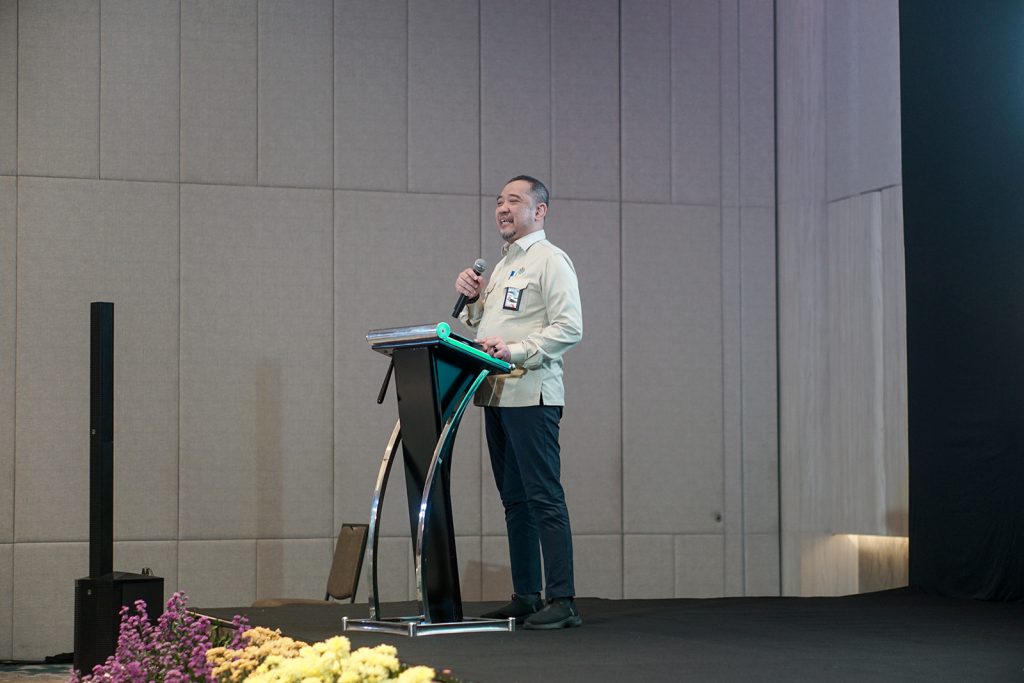
“Through the Asta Cita agenda, the national government has positioned climate change as a strategic pillar of national development, particularly through green economic growth and climate resilience. To achieve this, the government continues to strengthen the capacity of local governments and communities to address climate change impacts through various national development policies, including the promotion of community-based adaptation initiatives,” he said.
According to Franky, successful practices emerging from local communities should become part of Indonesia’s broader response to the climate crisis.
“What communities are doing in Pekalongan, Bulukumba, Toraja, and Samarinda demonstrates that adaptation solutions rooted in local needs are often the most effective. Our challenge is to strengthen, replicate, and integrate these lessons into broader development policies,” he added.
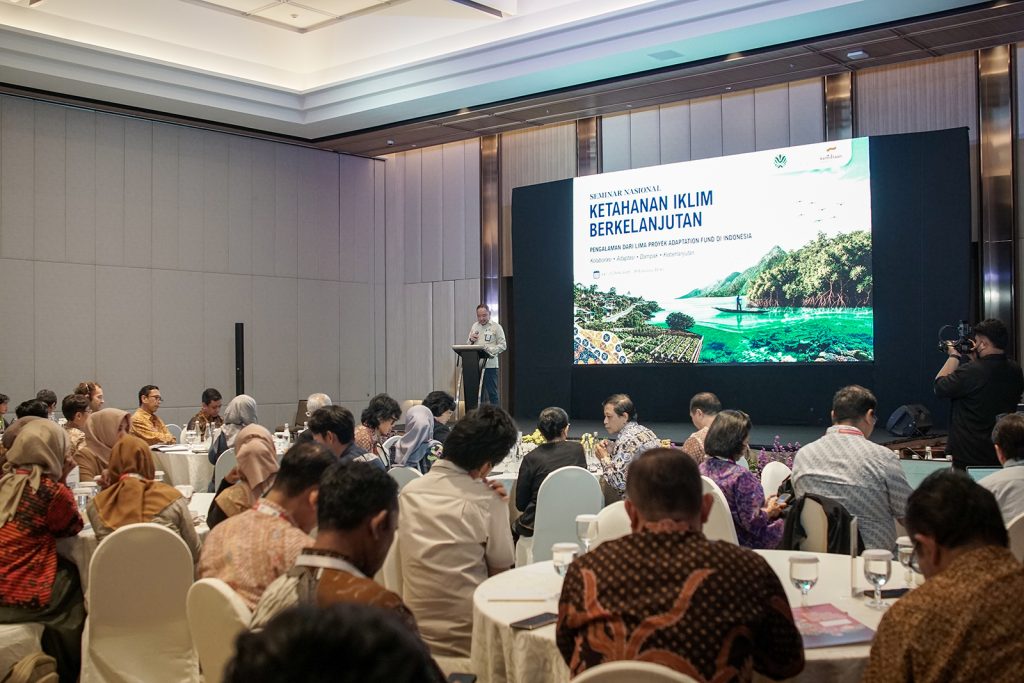
Since 2019, the Ministry of Environment, through the Deputy for Climate Change Control and Carbon Economic Value Governance, together with KEMITRAAN and supported by the Adaptation Fund (AF), has implemented climate change adaptation programs in five regions across Indonesia experiencing different climate-related challenges.
In Pekalongan City, communities face tidal flooding and sea-level rise that affect residential areas and coastal economic activities. In Bulukumba Regency, changing weather patterns have impacted agricultural production and the livelihoods of the Kajang Indigenous Community. Meanwhile, in four regencies within the Saddang River Basin in South Sulawesi Province, extreme weather has reduced the productivity of the globally recognized Toraja coffee commodity. In Samarinda City, increasing urban flood risks and extreme weather events present challenges that require strengthened governance and community resilience.
Through these programs, various stakeholders have been encouraged to strengthen community adaptive capacity, improve climate-responsive development planning, and build collaboration among national and local governments, village administrations, community groups, and vulnerable populations.
Hugo Remaury, representative of the Adaptation Fund, emphasized that the organization supports initiatives aimed at strengthening community resilience to climate change impacts around the world, including in Indonesia.

The Adaptation Fund (AF) is an international financing mechanism established as part of global commitments to support climate adaptation initiatives.
“The Adaptation Fund was established under decisions of the Conference of the Parties (COP) to the United Nations Framework Convention on Climate Change (UNFCCC) to finance projects and programs that help vulnerable communities in developing countries adapt to climate change. Funding is provided based on the needs, perspectives, and priorities identified by each country,” he explained.
According to Hugo, the success of climate change adaptation depends on the ability to deliver solutions that respond to local realities and community needs.
“Communities on the frontlines of climate change are not merely beneficiaries; they are also sources of knowledge and innovation. Indonesia’s experience demonstrates that when climate finance is combined with local ownership, community leadership, and strong collaboration, the resulting impacts become more inclusive, sustainable, and responsive to people’s actual needs.”
He further noted that lessons from project locations across Indonesia demonstrate how investments in climate adaptation can simultaneously generate social, economic, and environmental benefits.
Meanwhile, KEMITRAAN Executive Director Nurina Widagdo emphasized that each region faces distinct climate challenges and therefore requires context-specific approaches.
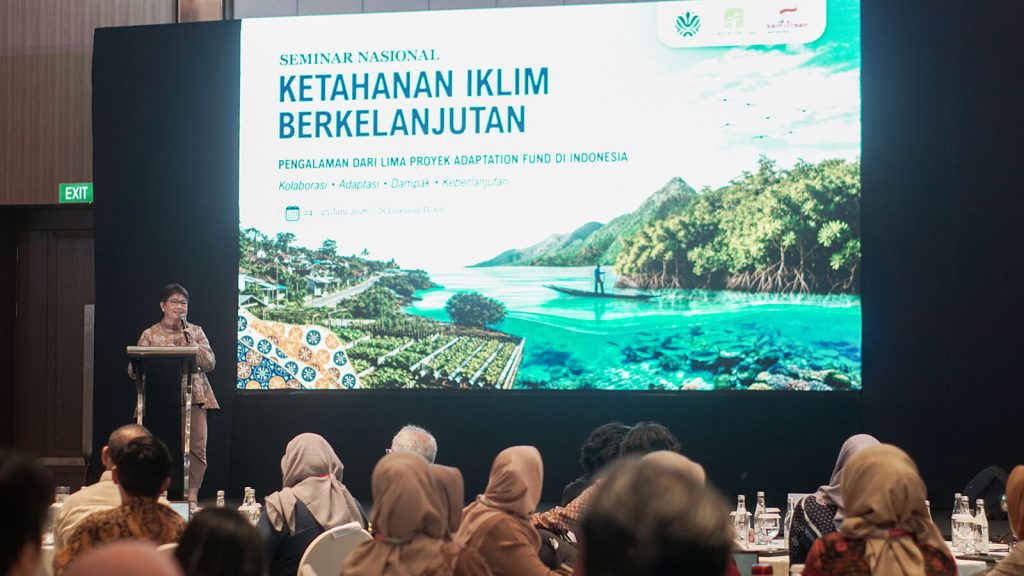
“There is no one-size-fits-all solution. What we have learned from Pekalongan, Bulukumba, Tana Toraja and other districts in South Sulawesi, as well as Samarinda, is that successful adaptation emerges when community needs, government commitment, local knowledge, and partner support are brought together within a collaborative framework,” she explained.
According to Nurina, strengthening climate resilience must go hand in hand with enhancing community capacity and creating sustainable livelihood opportunities.
“Adaptation is not only about surviving the impacts of climate change; it is about ensuring that communities have the capacity, resources, and opportunities to continue thriving amid ongoing change.”

Nurina also highlighted that, beyond implementing programs in Pekalongan City and Central Java, KEMITRAAN collaborates with several civil society organizations, including Tim Layanan Kehutanan Masyarakat (TLKM), Organisasi Aksi Sosial & Ekologi (OASE), and SRP Payo-payo in South Sulawesi Province; Harmoni Alam Indonesia (HAI) in Central Maluku Regency; and the Center for Climate and Urban Resilience (CeCUR) in Samarinda City.
She further noted that KEMITRAAN was not selected exclusively by the Adaptation Fund. Rather, it earned accreditation through a rigorous assessment process covering institutional governance, financial management systems, procurement mechanisms, risk management, and environmental and social safeguards. According to her, this accreditation represents an important opportunity for Indonesia to access international climate finance.
“The Adaptation Fund’s trust in KEMITRAAN demonstrates that Indonesian national institutions are capable of meeting international standards for managing climate finance. This accreditation creates opportunities for more global funding to directly reach communities that are most vulnerable to climate change impacts.”
The National Seminar, taking place on 24–25 June 2026, is expected to serve as a platform for sharing lessons learned from different regions while strengthening multi-stakeholder collaboration to build a more resilient, inclusive, and climate-adaptive Indonesia.