

The implementation of the Sustainable Palm Oil Roadmap requires several enabling conditions to ensure that Aceh’s palm oil industry can address governance challenges in plantation development and commodity management in a fair, resilient, and sustainable manner through participatory, inclusive, collaborative, and integrated approaches.
Strengthening Sustainable Palm Oil Governance in Aceh Province
The Sustainable Palm Oil Roadmap mandates a governance framework for oil palm plantation development that integrates a multi-stakeholder approach to engage independent smallholder farmers as a key driver of Aceh Province’s economic development. At the same time, it upholds the principles of sustainability while ensuring that plantation and landscape management delivers broad, equitable, and inclusive benefits.
Aceh is one of Indonesia’s earliest palm oil-producing provinces. Large-scale oil palm plantations were first established in Aceh Tamiang in 1911. Today, the Aceh Provincial Government has designated 19 districts as strategic palm oil production hubs, recognizing the commodity as an important source of regional revenue and fiscal income.
With approximately 470,826 hectares of oil palm plantations, covering nearly 10 percent of the province’s total land area around 52 percent of Aceh’s plantations are managed by independent smallholders, while the remaining 48 percent are operated under plantation concession (HGU) permits. This sector has the potential to provide sustainable livelihoods for more than one million independent oil palm farmers, representing nearly 30 percent of Aceh’s population.
Aceh contributes 3.36 percent of Indonesia’s total oil palm plantation area and 2.14 percent of national crude palm oil (CPO) production, with an annual output of approximately 966,044 tons of CPO. As of 2022, the province had 60 crude palm oil mills operating across 19 districts and municipalities, with a combined processing capacity of 11.8 million tons of fresh fruit bunches (FFB) annually. Key challenges remain in improving the productivity of smallholder plantations, strengthening farmer organizations and cooperatives, securing land legality, and establishing a sustainable and traceable supply chain.
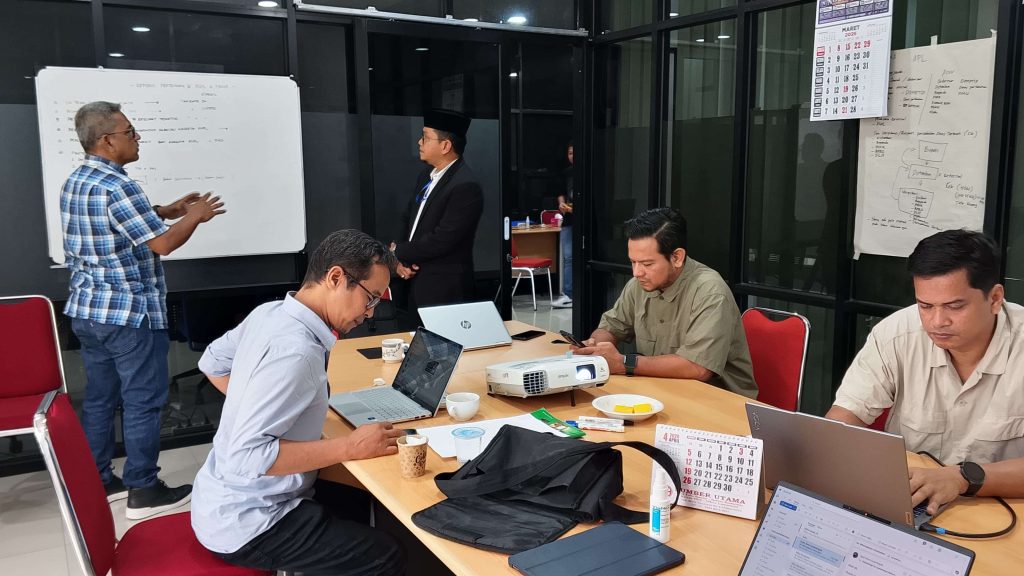
To strengthen governance and redesign the development of Aceh’s palm oil industry in line with the Sustainable Palm Oil Roadmap, the Aceh Regional Development Planning Agency (Bappeda), through Head of Bappeda Decree No. 500/6/39 of 2025, established the Agricultural, Plantation, and Food Development Study Team. PMU-KSB and IDH Foundation are members of this team. Several integrated initiatives have been undertaken to support the team’s work, including the following:
Policy Study on Palm Oil Commodity Governance and Trade
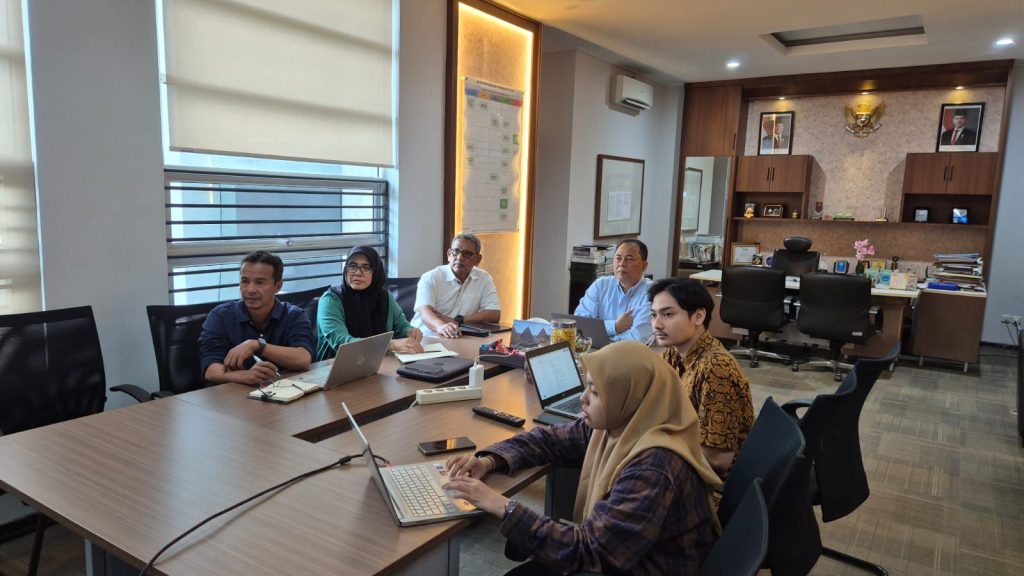
This policy study aims to strengthen coordination across relevant government institutions, particularly the Agriculture and Plantation Office, the Trade and Industry Office, the Cooperatives and MSMEs Office, and the Customs Office to improve the governance and trade of the palm oil sector. By enhancing cross-sector coordination, the study seeks to create a more effective and integrated governance system that contributes to regional economic growth and increased local government revenue in Aceh. The study was conducted by researchers from Syiah Kuala University beginning in August 2025, and its findings were presented to key stakeholders in December 2025. The recommendations will inform government policies and support the establishment of a Sustainable Supply Chain Working Group planned for July–August 2026.
Study on Optimizing Agricultural, Plantation, and Food Development Areas
This study produced a report focusing on downstream development opportunities for palm oil-based food and non-food products. It assessed the existing governance framework, production systems, and palm oil supply chain in Aceh. Working closely with PMU-KSB, the research team formulated strategies to strengthen downstream industries as the foundation for developing value-added food and non-food industries based on palm oil commodities. The strategy was finalized on 5 March 2026. The study is expected to provide practical recommendations to address key challenges in optimizing the plantation sector, including land legality, farmer institutional development, and the establishment of a deforestation-free commodity traceability system.
Assessing the Development Needs for a Cooperative-Based Supply Chain Model for Independent Smallholders
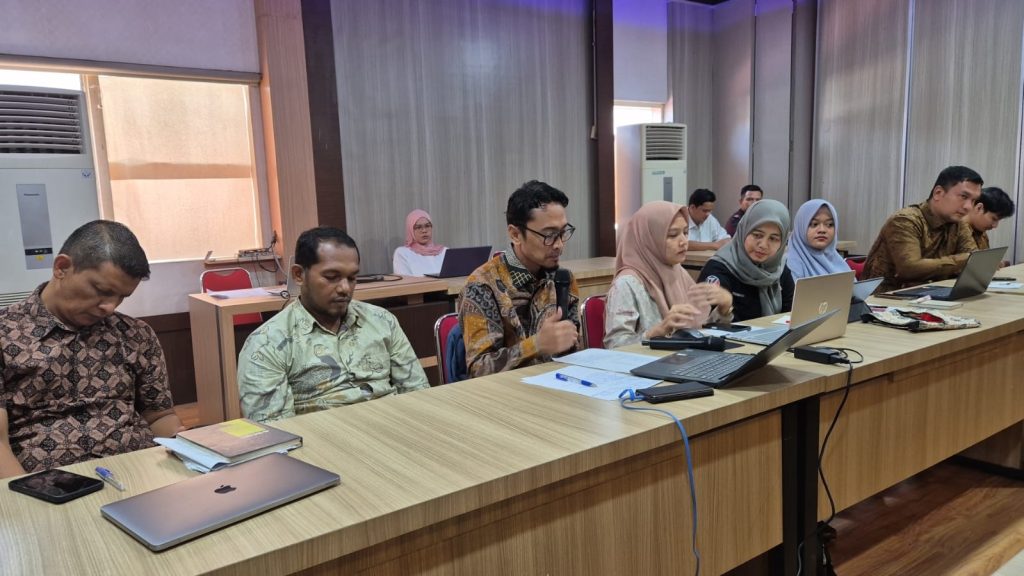
PMU-KSB, together with Bappeda, conducted exploratory visits to Aceh Jaya Regency in January and April 2026 to assess the feasibility of developing an integrated supply chain model. These visits identified several locations where independent smallholder farmers require support in establishing cooperative institutions. The assessment also highlighted the need to facilitate land legality mapping to accelerate the issuance of Smallholder Plantation Registration Certificates (STDB). Follow-up discussions were held on 6 May 2026 with the Head of the Economic Division of Bappeda Aceh Jaya at the PMU-KSB Aceh office.
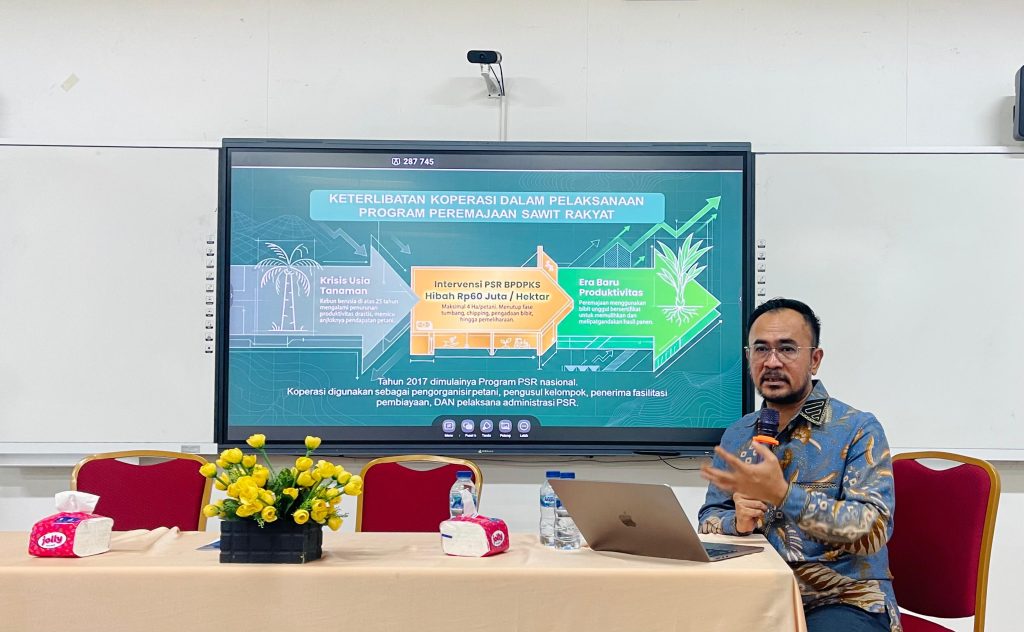
Aceh Jaya was selected because it has been identified by the Aceh Provincial Government as a priority area for plantation and livestock development, with independent oil palm plantations representing the region’s largest agricultural commodity. According to Reza Ferdian, Head of the Cooperatives and MSMEs Office, strengthening the governance and management of oil palm cooperatives is essential to ensure the effective implementation of the national replanting programme for the benefit of independent smallholder farmers.
Similar visits to Aceh Singkil in May and June 2026 brought together farmers and development partners, including Earthworm Foundation, Swisscontact, Bappeda, the Land Office, the ATR/BPN Office, the Plantation Office, Sinar Mas, and Musim Mas to identify seven villages as potential pilot locations. The discussions also explored the automatic synchronization of land ownership certificates (SHM) and Smallholder Plantation Registration Certificates (STDB) through strengthened collaborative regional regulations.
PMU-KSB has also coordinated with the newly appointed Head of the Cooperatives and MSMEs Office to integrate institutional support for strengthening smallholder cooperatives within the pilot supply chain initiative. This effort represents a key step toward improving farmer livelihoods while enhancing commodity traceability and promoting a more sustainable palm oil supply chain.