

By: Yael Stefany
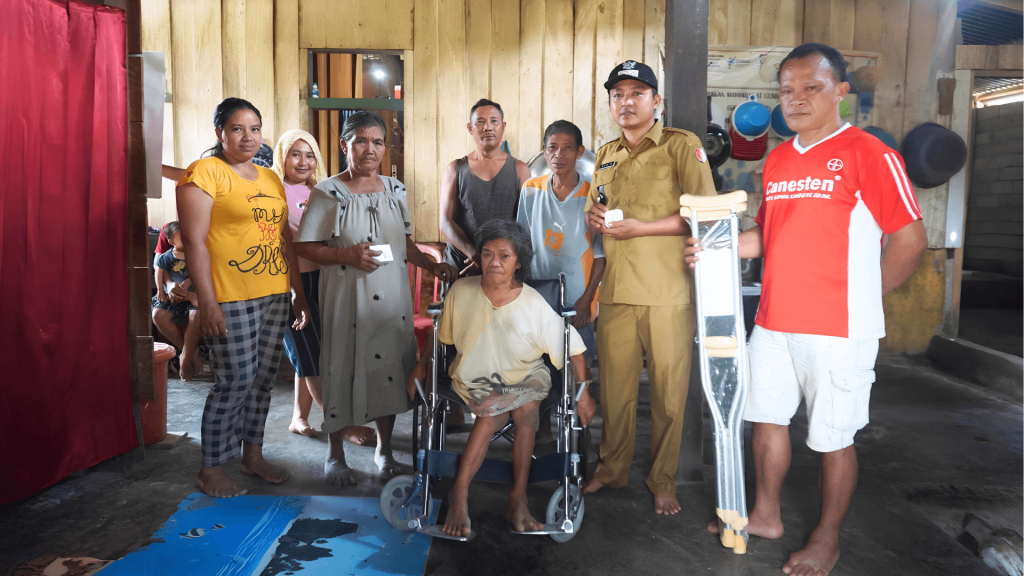
In many Indigenous communities, development planning still often begins with the same familiar checklist: roads that need repairing, irrigation systems that need to be built, or bridges that need to be connected. Village deliberations are held year after year, following a pattern that has changed very little. The voices most often heard are those closest to decision-making spaces. Meanwhile, some members of Indigenous communities are rarely, if ever, included in these conversations, including women, persons with disabilities, and other marginalized groups.
Yet truly inclusive development requires more than simply ensuring that Indigenous territories receive development investments. Equally important is ensuring that every member of an Indigenous community has an equal opportunity to shape the direction of development in their own community.
In the villages of Peana and Banasu in Sigi Regency, this situation persisted for years. When the KARSA Institute began providing facilitation through the ESTUNGKARA Program in 2022, disability had not yet been recognized as an integral part of local governance. Village governments were aware that persons with disabilities lived in their communities, but they had not yet made the connection between their presence and the village development planning process.
For persons with disabilities living within Indigenous communities, the barriers they face are often layered and interconnected. They encounter not only limited access to healthcare, education, and accessible infrastructure, but also restricted opportunities to participate in decision-making processes at both the village and Indigenous community levels. As a result, their needs were rarely reflected in development planning, despite being an inseparable part of the Indigenous community itself.
Consequently, village deliberations focused primarily on physical infrastructure. Farm access roads, concrete paving, production facilities, and other infrastructure projects became the main priorities. Discussions on accessibility, the participation of vulnerable groups, or the social barriers that prevent some community members from fully benefiting from development were almost entirely absent.
The challenge is not simply a lack of funding. More fundamentally, it stems from the absence of a development perspective that places those most at risk of being left behind at the center of planning.
The ESTUNGKARA Program did not enter these communities with a list of projects or aid packages. Instead, its facilitation began with something much simpler but far more transformative: changing the conversation.
Through participatory data collection in five partner villages, village governments and community members began to take a fresh look at who had long been overlooked. In Banasu Village, for example, 19 persons with disabilities were identified among a population of approximately 300 residents. This figure was more than just a statistic. It became the starting point for discussing the realities behind the numbers who these individuals were, the barriers they faced, and why their needs had never been reflected in village development planning documents.
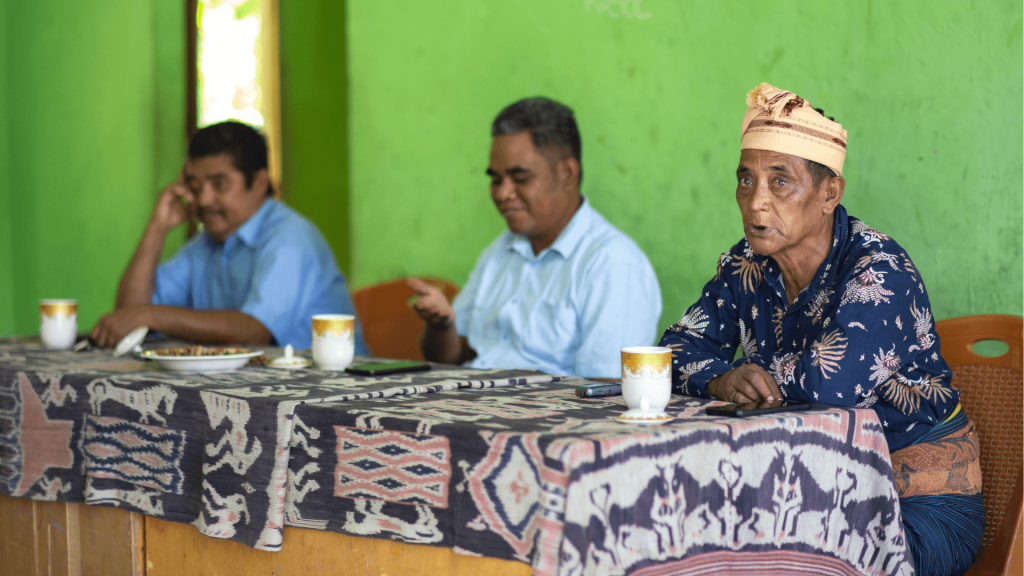
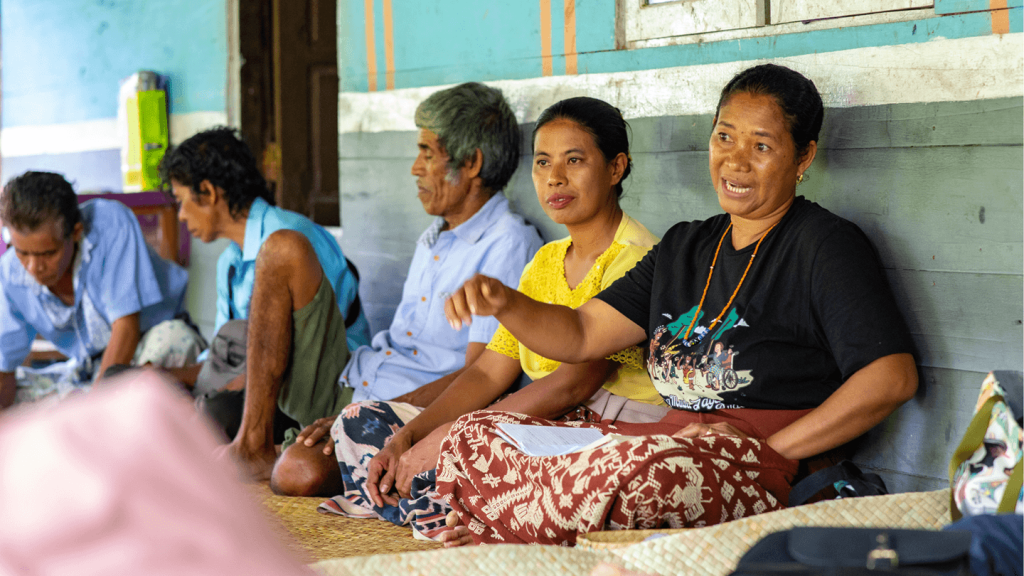
These questions were brought into discussions involving the village head, the Village Consultative Body (BPD), customary institutions, women’s forums, and community leaders. Some took place in formal meetings, while others emerged through smaller conversations that created greater space for listening to and reflecting on people’s lived experiences. It was within these dialogues that change began to take root.
Gradually, village governments came to recognize that persons with disabilities are not merely recipients of social assistance. They are citizens and members of Indigenous communities with the same right as everyone else to shape the direction of development. This awareness did not emerge from a single training session. Rather, it was built through an ongoing process of dialogue, strengthening perspectives on Gender Equality, Disability, and Social Inclusion (GEDSI), and connecting the principles of inclusion with the cultural and religious values embedded within the community.
This shift in perspective became evident when disability issues were incorporated into the Village Development Planning Meeting (Musrenbangdes). In 2024, the Government of Banasu Village specifically invited facilitators from the ESTUNGKARA Program to deliver a session on GEDSI during the Musrenbangdes. For the first time, the needs of persons with disabilities were discussed as an integral part of the village’s development priorities.
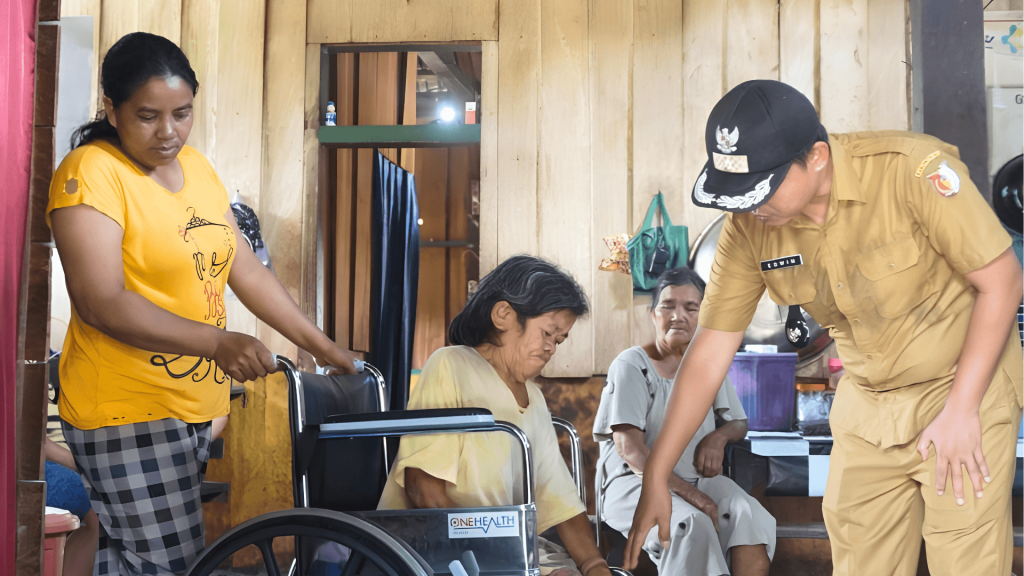
The decision that emerged from the meeting appeared modest: the village government allocated Village Fund resources to procure wheelchairs and hearing aids. Yet its significance extended far beyond the monetary value of the allocation.
For the first time, the needs of persons with disabilities moved beyond administrative records and became part of the village’s political decision-making process through formal planning and budgeting documents. This marked the point at which inclusion became embedded in local governance.
One incident further deepened this awareness. One of the intended wheelchair recipients passed away before the assistance could be delivered. The event served as a powerful reminder that delayed policies are not merely administrative shortcomings. Delay can also mean losing the opportunity for someone to enjoy their fundamental rights.
Since then, the village government has created broader opportunities for persons with disabilities to participate in the preparation of the Village Government Work Plan (RKPDes) and Village Deliberation Meetings. The relationship between the government and citizens has gradually evolved. Whereas decisions were once determined almost entirely by the village government, persons with disabilities now have the opportunity to voice their needs and influence the direction of village development.
A similar transformation took place in Peana Village. The commitment to inclusive development was reinforced through the adoption of a Village Regulation on Inclusion. Women’s forums, which had previously participated merely as a formality, began presenting systematically developed proposals. They were no longer simply attendees fulfilling meeting invitations, but active participants who articulated their perspectives and influenced development decisions.
This transformation reflects a more fundamental shift from a charity-based approach to a rights-based approach. Persons with disabilities are no longer viewed as passive beneficiaries waiting for assistance, but as rights holders with the authority to influence policies that affect their lives. As these changes became embedded at the village level, their impact gradually extended to the district level.
The lessons learned from the villages became one of the foundations for the formulation of Sigi District Regulation No. 5 of 2024 on the Implementation of the Respect, Protection, and Fulfillment of the Rights of Persons with Disabilities, which was subsequently reinforced through Regent Regulation No. 32 of 2025 on the Regional Action Plan for Persons with Disabilities 2025–2029. These regulations not only established formal commitments but also transformed the way local government operates by requiring inclusive analysis, integrating disability issues into planning and budgeting, ensuring the participation of organizations of persons with disabilities, and conducting cross-sectoral evaluations. Ultimately, what changed was not merely policy documents, but the governance system itself.
The participatory data collected at the village level became an important reference for the district government in improving its information system on vulnerable groups. Organizations of persons with disabilities began participating in public consultation forums, Musrenbang, and the preparation of the Regional Action Plan. Several district government agencies that had previously regarded disability as merely an administrative obligation began integrating inclusive education, accessible healthcare services, employment opportunities, and disability-friendly infrastructure into the Sigi District Regional Government Work Plan (RKPD) for 2027.
The experience in Sigi demonstrates that inclusive development governance does not always begin with the enactment of new regulations. It begins with the courage to ask whose voices have long gone unheard, including Indigenous community members experiencing multiple and intersecting forms of vulnerability. When persons with disabilities, women, and other marginalized groups are genuinely included in village deliberations, development produces more than physical infrastructure. It strengthens recognition of every citizen’s right to shape the future of their own community.
This is the essence of inclusive development that KEMITRAAN continues to advance through the ESTUNGKARA Program. Ensuring that Indigenous Peoples participate equally in development governance not only expands access to essential services, but also strengthens women’s participation, promotes economic self-reliance, and fosters policies that genuinely serve every member of the community. Development becomes truly meaningful when no member of an Indigenous community is left behind, either in the process or in the benefits it creates.