Home / Publication

Strengthening Networks and the Role of District Deforestation Monitoring Teams

Integrating Deforestation Monitoring Systems and Grievance Reporting Protocols
Integrating Deforestation and Landscape Monitoring Systems

In 2018, a landscape coalition was established through a collaborative landscape monitoring initiative involving the World Resources Institute (WRI), IDH Foundation, Wageningen University, the Leuser Conservation Forum (FKL), and the multi-stakeholder forums (PUPL) of Aceh Tamiang and East Aceh.

Through this collaboration, Aceh Tamiang and East Aceh Regencies—which had previously established PPI Compact partnerships with the IDH Foundation—supported the development of district-level deforestation monitoring teams. Within this arrangement, the PUPL forums became part of the field verification teams alongside the Provincial Forestry Office and other relevant stakeholders.

The Deforestation Monitoring Team in Aceh Tamiang has been operational since October 2021 following the issuance of Aceh Tamiang Regent Decree No. 822/2021. Meanwhile, the East Aceh Deforestation Monitoring Team was established through Regent Decree No. 525/64/2024, which formally appointed the Steering Committee, Implementation Team, and Verification Team. PUPL East Aceh serves as a member of both the Implementation and Verification Teams.

Through a Governor’s Decree, the PMU-KSB was mandated to develop a provincial deforestation monitoring and grievance management system beginning in 2025. Through a multi-stakeholder facilitation process, a provincial monitoring system and protocol were established and are now being integrated with existing district-level deforestation monitoring systems in East Aceh, Aceh Tamiang, and Aceh Singkil.
The integration of the deforestation monitoring system and protocols has been implemented in three phases. The first phase focuses on connecting the provincial monitoring system with the monitoring systems operated by government institutions responsible for conservation areas, protected forests, and national parks, as well as with the Agriculture and Plantation Office (Distanbun), which oversees Areas for Other Land Uses (APL).

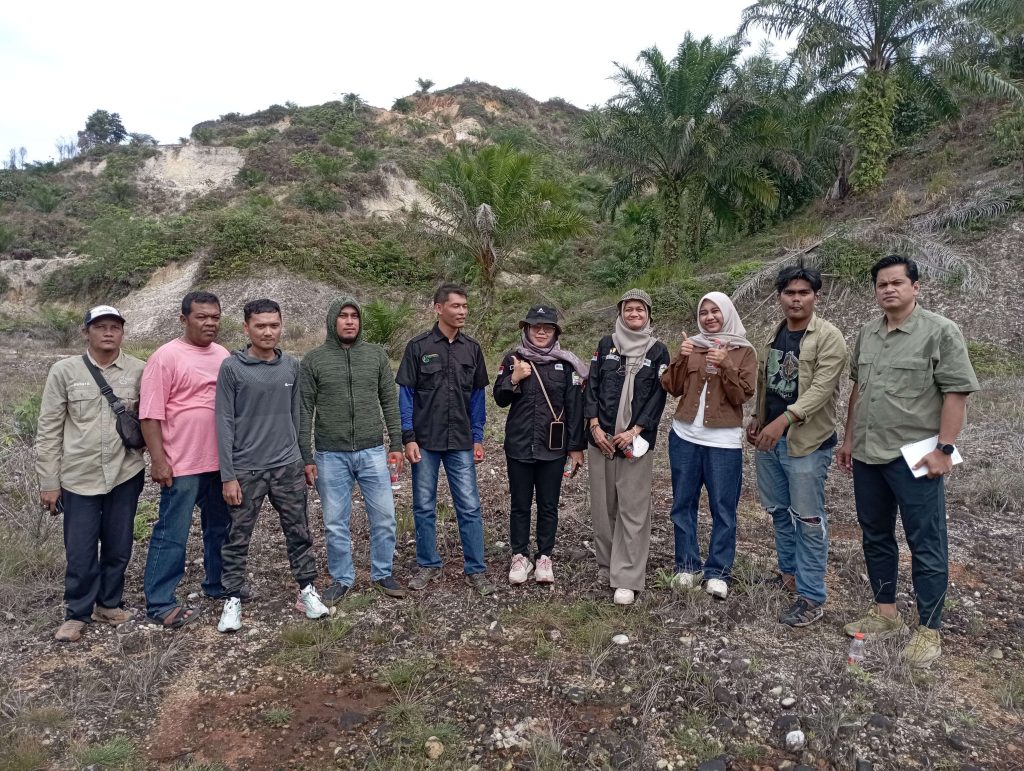
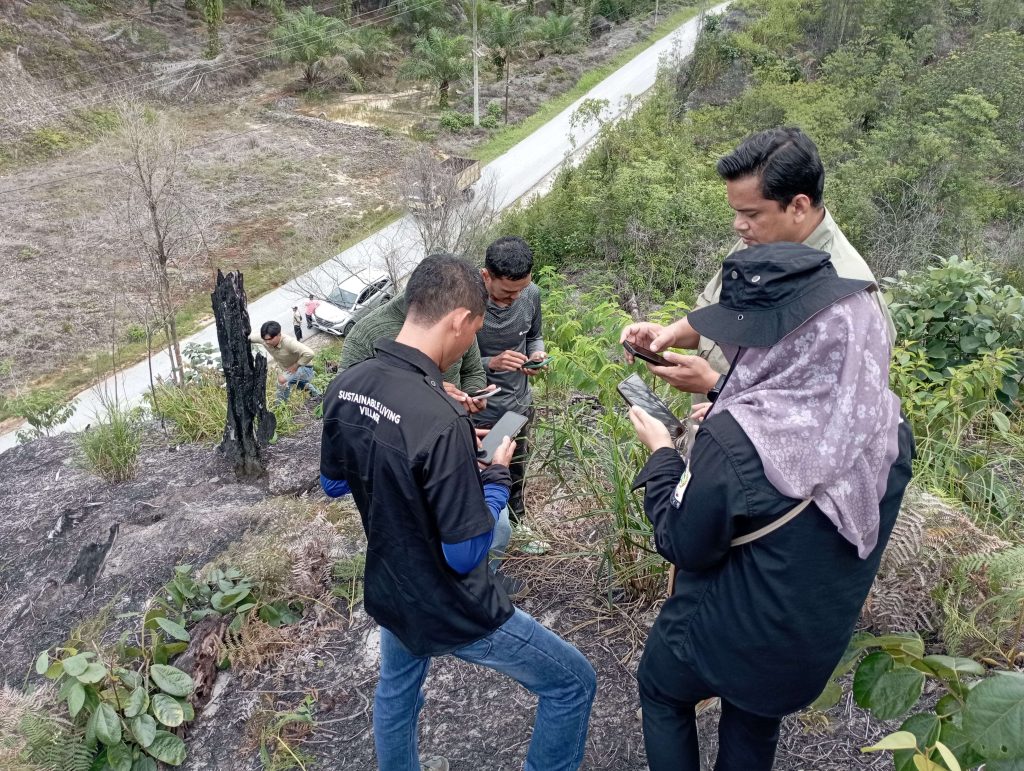
The second phase strengthens both the deforestation monitoring and grievance reporting systems within district-level multi-stakeholder institutions, particularly in Aceh Tamiang and East Aceh. In addition to introducing the integrated monitoring system and protocols, this phase facilitates knowledge sharing and strengthens collaborative monitoring networks. Through technical discussions and training sessions, participants jointly developed standardized field verification methodologies, enabling more consistent and effective integrated monitoring operations.

Engagement with district-level multi-stakeholder forums was carried out through a series of technical meetings and coordination sessions. PMU-KSB participated as a resource institution in the Capacity Building Training for the East Aceh Landscape Regional Monitoring Team (TPDD), held in Berastagi from 8–10 April 2026. During the training, PMU-KSB introduced the provincial deforestation monitoring system and protocols while also fostering coordination and collaboration among monitoring institutions. The event further provided an opportunity to learn from East Aceh’s field verification experiences, which informed the refinement of PMU-KSB’s monitoring methodology.

A similar engagement was conducted with the Leuser Conservation Forum (FKL) and PUPL Aceh Tamiang during technical coordination meetings and capacity-building activities for the Aceh Tamiang TPDD in Sabang from 4–8 May 2026.
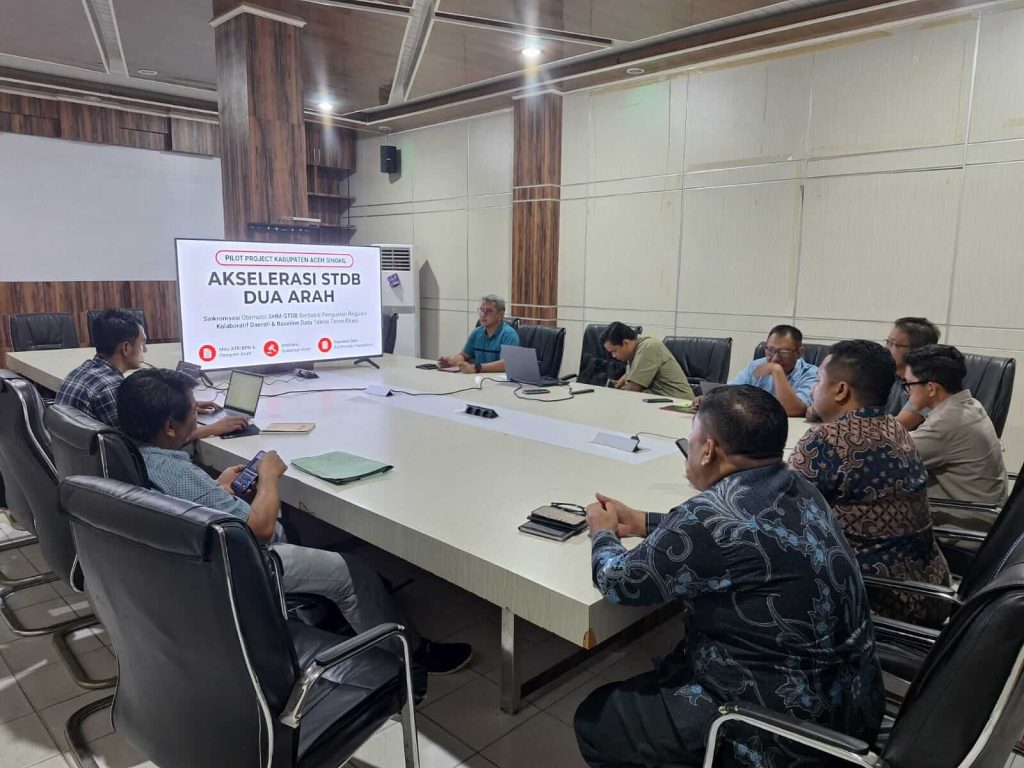
The third phase focused on strengthening the capacity of newly established district-level multi-stakeholder forums and monitoring teams, particularly in Aceh Singkil. Following the introduction of the deforestation monitoring system and protocols, institutional monitoring plans were developed at the end of May 2026. These activities were followed by practical field verification exercises for monitoring team members conducted from 17–20 June 2026.

The collaboration with PUPL Aceh Tamiang and East Aceh resulted in the development of an enhanced field verification model that is fully connected to the provincial deforestation monitoring system while incorporating standardized and accurate digital data collection and verification forms.
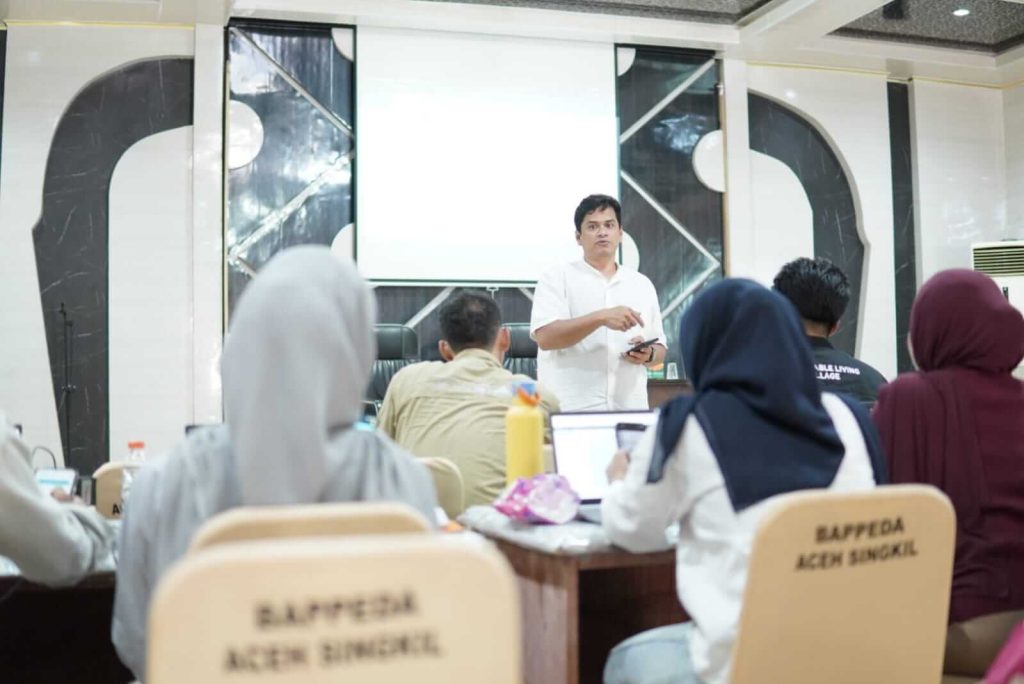
Engagement with the Regional Development Planning Agency (Bappeda) also became a key component of this initiative in securing long-term institutional commitment. One of the main objectives is to establish data-sharing mechanisms concerning areas designated for deforestation monitoring, smallholder plantation locations, land concessions (HGU), and village boundaries. This collaboration is also expected to support the acceleration of Smallholder Plantation Registration Certificates (STDB) in Aceh Singkil.

2020

This agreement was signed between Green Climate Fund (GCF) and PARTNERSHIP. This agreement formalizes KEMITRAAN’s accountability in implementing projects approved by the GCF.

For your information, the GCF is the world’s largest special fund that helps developing countries reduce greenhouse gas emissions and increase their ability to respond to climate change.

These funds were collected by the United Nations Framework Convention on Climate Change (UNFCCC) in 2010. The GCF has an important role in realizing the Paris Agreement, namely supporting the goal of keeping the average global temperature increase below 2 degrees Celsius.

2000-2003

KEMITRAAN played a crucial role in supporting the development of legislation to establish the KPK. This was followed by steps to support the Government and DPR in selecting competent commissioner candidates and also supporting civil society groups to critically monitor the selection process. After the commissioners were appointed, they asked KEMITRAAN to help with the institutional design and initial recruitment of the KPK, as well as play the role of donor coordinator. It is clear that KEMITRAAN plays a key role in supporting the Corruption Eradication Commission to develop the capacity and strategies needed to work as effectively as possible.

2016

In March 2016, KEMITRAAN received international accreditation from the Adaptation Fund. The Adaptation Fund Board, in its 27th meeting, decided to accredit KEMITRAAN as National Implementing Entity (NIE) from the Adaptation Fund. KEMITRAAN is the first and only Indonesian institution to be accredited as a NIE Adaptation Fund in Indonesia.

2003

In 2003, KEMITRAAN became an independent legal entity registered as a Non-Profit Civil Partnership. At that time, KEMITRAAN was still a program managed by UNDP until the end of 2009. Since the beginning of 2010, KEMITRAAN took over full responsibility and accountability for the programs and their development.

1999-2000

The Partnership for Governance Reform, or KEMITRAAN, was founded in 2000 following Indonesia’s first free and fair general election in 1999. This historic election is an important step in Indonesia’s efforts to move away from an authoritarian past towards a democratic future. PARTNERSHIP was established from a multi-donor trust fund and is managed by United Nations Development Programme (UNDP) with a mandate to advance governance reform in Indonesia

1999-2000

Kemitraan bagi Pembaruan Tata Kelola Pemerintahan, atau KEMITRAAN, didirikan pada tahun 2000 setelah berlangsungnya pemilihan umum pertama di Indonesia yang bebas dan adil pada tahun 1999. Pemilu bersejarah ini merupakan langkah penting dalam upaya Indonesia keluar dari masa lalu yang otoriter menuju masa depan yang demokratis. KEMITRAAN didirikan dari dana perwalian multi-donor dan dikelola oleh United Nations Development Programme (UNDP) dengan mandat untuk memajukan reformasi tata kelola pemerintahan di Indonesia.

2020

This agreement was signed between Green Climate Fund (GCF) and PARTNERSHIP. This agreement formalizes KEMITRAAN’s accountability in implementing projects approved by the GCF.

For your information, the GCF is the world’s largest special fund that helps developing countries reduce greenhouse gas emissions and increase their ability to respond to climate change.

These funds were collected by the United Nations Framework Convention on Climate Change (UNFCCC) in 2010. The GCF has an important role in realizing the Paris Agreement, namely supporting the goal of keeping the average global temperature increase below 2 degrees Celsius.

2020

This agreement was signed between Green Climate Fund (GCF) and PARTNERSHIP. This agreement formalizes KEMITRAAN’s accountability in implementing projects approved by the GCF.

For your information, the GCF is the world’s largest special fund that helps developing countries reduce greenhouse gas emissions and increase their ability to respond to climate change.

These funds were collected by the United Nations Framework Convention on Climate Change (UNFCCC) in 2010. The GCF has an important role in realizing the Paris Agreement, namely supporting the goal of keeping the average global temperature increase below 2 degrees Celsius.

2016

In March 2016, KEMITRAAN received international accreditation from the Adaptation Fund. The Adaptation Fund Board, in its 27th meeting, decided to accredit KEMITRAAN as National Implementing Entity (NIE) from the Adaptation Fund. KEMITRAAN is the first and only Indonesian institution to be accredited as a NIE Adaptation Fund in Indonesia.

2003

In 2003, KEMITRAAN became an independent legal entity registered as a Non-Profit Civil Partnership. At that time, KEMITRAAN was still a program managed by UNDP until the end of 2009. Since the beginning of 2010, KEMITRAAN took over full responsibility and accountability for the programs and their development.

2000-2003

KEMITRAAN played a crucial role in supporting the development of legislation to establish the KPK. This was followed by steps to support the Government and DPR in selecting competent commissioner candidates and also supporting civil society groups to critically monitor the selection process. After the commissioners were appointed, they asked KEMITRAAN to help with the institutional design and initial recruitment of the KPK, as well as play the role of donor coordinator. It is clear that KEMITRAAN plays a key role in supporting the Corruption Eradication Commission to develop the capacity and strategies needed to work as effectively as possible.

1999-2000

The Partnership for Governance Reform, or KEMITRAAN, was founded in 2000 following Indonesia’s first free and fair general election in 1999. This historic election is an important step in Indonesia’s efforts to move away from an authoritarian past towards a democratic future. PARTNERSHIP was established from a multi-donor trust fund and is managed by United Nations Development Programme (UNDP) with a mandate to advance governance reform in Indonesia