Central Sulawesi Forestry Agency Provides Production Equipment to Social Forestry and Forest Farmer Groups through the RBP GCF REDD+ Program
5 August, 2026Admin
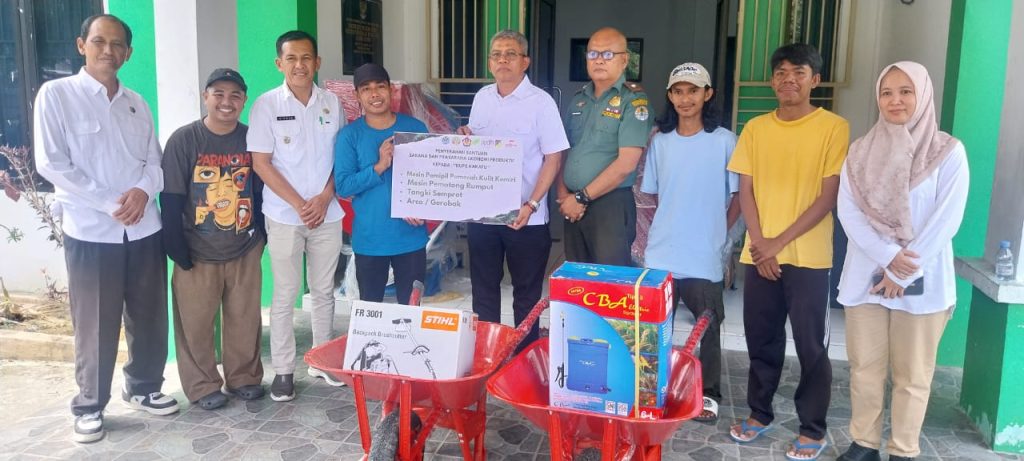
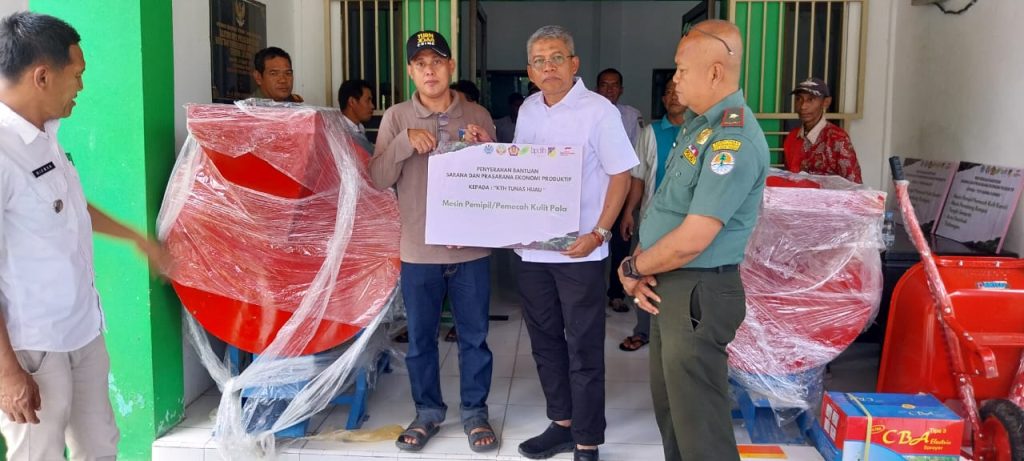
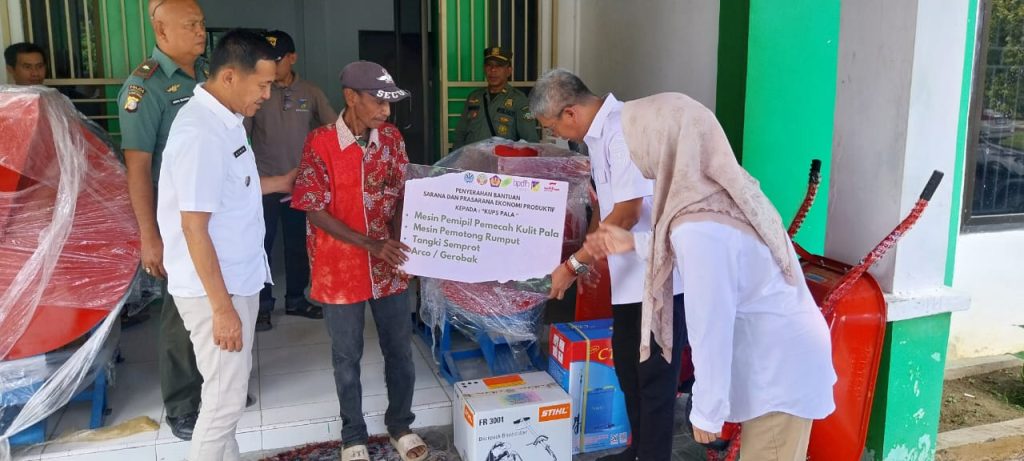
Committed to enhancing the economic value of forests through Social Forestry, the Central Sulawesi Provincial Forestry Agency, in collaboration with Forest Management Units (FMUs), has provided production equipment to 31 Social Forestry Groups (KPS) and 27 non-Social Forestry Forest Farmer Groups (KTH Non-PS) supported by FMUs across 13 districts. The assistance consists of production equipment to strengthen forest- and non-timber forest product-based livelihoods.
The assistance was symbolically handed over by Ir. Susanto Wibowo, S.Hut., M.Si., IPU, Head of the Central Sulawesi Provincial Forestry Agency, to the Kakafu and Pala Forest Farmer Groups (KTH), as well as the Bambu Kuning and Tunas Hijau Forest Farmer Groups, at the Banawa Lalundu Forest Management Unit Office.
“We hope this assistance will be utilized effectively to improve community livelihoods by supporting the development of forest and non-forest products,” he said.
Imran, Head of the Kakafu Forest Farmer Group, explained that the support would significantly improve the quality and value of candlenut production.
“Previously, we harvested and sold candlenuts directly for IDR 7,000–8,000 per kilogram. With the new candlenut shelling machine, the selling price can increase to around IDR 15,000–20,000 per kilogram,” he explained.
A similar response came from Rafiqa, a member of the Bambu Kuning Forest Farmer Group, who develops nutmeg-based products. She emphasized that the assistance also creates greater economic opportunities for women.
“Previously, nutmeg was only harvested and dried. With the nutmeg shelling machine, we can process it into candied nutmeg and sell it directly to the market without relying on middlemen,” she said.
To ensure that the assistance reached the intended beneficiaries, Social Forestry and Forest Farmer Group facilitators in each FMU conducted an identification process. Recipient groups were selected based on clear criteria, including being active groups with established business products. This assessment ensured that the equipment was distributed to groups with genuine needs and strong potential for business development.
According to Edy Wicaksono, Project Manager of the RBP GCF REDD+ Program, providing production equipment is part of a broader effort to strengthen Social Forestry and promote sustainable forest management while improving community livelihoods.
“Before providing production equipment, the program had already supported Social Forestry groups through boundary demarcation, resource inventories, business work plan preparation, business partnership development, and capacity-building activities,” he explained.
Following the symbolic handover, the equipment will be delivered directly by vendors to each recipient group in their respective locations under the supervision of the relevant FMU Head or representative. The handover process will be documented through official handover reports.
The supported groups represent a wide range of community enterprises, including rattan, bamboo and forest pandan weaving, honey production, coffee, cassava, coconut, candlenut, nutmeg, cloves, and livestock farming.
2020
This agreement was signed between Green Climate Fund (GCF) and PARTNERSHIP. This agreement formalizes KEMITRAAN’s accountability in implementing projects approved by the GCF.
For your information, the GCF is the world’s largest special fund that helps developing countries reduce greenhouse gas emissions and increase their ability to respond to climate change.
These funds were collected by the United Nations Framework Convention on Climate Change (UNFCCC) in 2010. The GCF has an important role in realizing the Paris Agreement, namely supporting the goal of keeping the average global temperature increase below 2 degrees Celsius.
KEMITRAAN played a crucial role in supporting the development of legislation to establish the KPK. This was followed by steps to support the Government and DPR in selecting competent commissioner candidates and also supporting civil society groups to critically monitor the selection process. After the commissioners were appointed, they asked KEMITRAAN to help with the institutional design and initial recruitment of the KPK, as well as play the role of donor coordinator. It is clear that KEMITRAAN plays a key role in supporting the Corruption Eradication Commission to develop the capacity and strategies needed to work as effectively as possible.
In March 2016, KEMITRAAN received international accreditation from the Adaptation Fund. The Adaptation Fund Board, in its 27th meeting, decided to accredit KEMITRAAN as National Implementing Entity (NIE) from the Adaptation Fund. KEMITRAAN is the first and only Indonesian institution to be accredited as a NIE Adaptation Fund in Indonesia.
In 2003, KEMITRAAN became an independent legal entity registered as a Non-Profit Civil Partnership. At that time, KEMITRAAN was still a program managed by UNDP until the end of 2009. Since the beginning of 2010, KEMITRAAN took over full responsibility and accountability for the programs and their development.
The Partnership for Governance Reform, or KEMITRAAN, was founded in 2000 following Indonesia’s first free and fair general election in 1999. This historic election is an important step in Indonesia’s efforts to move away from an authoritarian past towards a democratic future. PARTNERSHIP was established from a multi-donor trust fund and is managed by United Nations Development Programme (UNDP) with a mandate to advance governance reform in Indonesia
Kemitraan bagi Pembaruan Tata Kelola Pemerintahan, atau KEMITRAAN, didirikan pada tahun 2000 setelah berlangsungnya pemilihan umum pertama di Indonesia yang bebas dan adil pada tahun 1999. Pemilu bersejarah ini merupakan langkah penting dalam upaya Indonesia keluar dari masa lalu yang otoriter menuju masa depan yang demokratis. KEMITRAAN didirikan dari dana perwalian multi-donor dan dikelola oleh United Nations Development Programme (UNDP) dengan mandat untuk memajukan reformasi tata kelola pemerintahan di Indonesia.
This agreement was signed between Green Climate Fund (GCF) and PARTNERSHIP. This agreement formalizes KEMITRAAN’s accountability in implementing projects approved by the GCF.
For your information, the GCF is the world’s largest special fund that helps developing countries reduce greenhouse gas emissions and increase their ability to respond to climate change.
These funds were collected by the United Nations Framework Convention on Climate Change (UNFCCC) in 2010. The GCF has an important role in realizing the Paris Agreement, namely supporting the goal of keeping the average global temperature increase below 2 degrees Celsius.
This agreement was signed between Green Climate Fund (GCF) and PARTNERSHIP. This agreement formalizes KEMITRAAN’s accountability in implementing projects approved by the GCF.
For your information, the GCF is the world’s largest special fund that helps developing countries reduce greenhouse gas emissions and increase their ability to respond to climate change.
These funds were collected by the United Nations Framework Convention on Climate Change (UNFCCC) in 2010. The GCF has an important role in realizing the Paris Agreement, namely supporting the goal of keeping the average global temperature increase below 2 degrees Celsius.
In March 2016, KEMITRAAN received international accreditation from the Adaptation Fund. The Adaptation Fund Board, in its 27th meeting, decided to accredit KEMITRAAN as National Implementing Entity (NIE) from the Adaptation Fund. KEMITRAAN is the first and only Indonesian institution to be accredited as a NIE Adaptation Fund in Indonesia.
In 2003, KEMITRAAN became an independent legal entity registered as a Non-Profit Civil Partnership. At that time, KEMITRAAN was still a program managed by UNDP until the end of 2009. Since the beginning of 2010, KEMITRAAN took over full responsibility and accountability for the programs and their development.
KEMITRAAN played a crucial role in supporting the development of legislation to establish the KPK. This was followed by steps to support the Government and DPR in selecting competent commissioner candidates and also supporting civil society groups to critically monitor the selection process. After the commissioners were appointed, they asked KEMITRAAN to help with the institutional design and initial recruitment of the KPK, as well as play the role of donor coordinator. It is clear that KEMITRAAN plays a key role in supporting the Corruption Eradication Commission to develop the capacity and strategies needed to work as effectively as possible.
The Partnership for Governance Reform, or KEMITRAAN, was founded in 2000 following Indonesia’s first free and fair general election in 1999. This historic election is an important step in Indonesia’s efforts to move away from an authoritarian past towards a democratic future. PARTNERSHIP was established from a multi-donor trust fund and is managed by United Nations Development Programme (UNDP) with a mandate to advance governance reform in Indonesia